
Drapery Cleaning Across the Phoenix Metro
Cleaned on the Rod. Nothing Comes Down.
Drapery is the work we are known for across Scottsdale, Paradise Valley, Fountain Hills, and the Phoenix Valley. Whether you call them drapes or curtains, window treatments hang untouched for years while they collect desert dust, cooking residue, pet dander, and smoke. That buildup settles deep into the weave, and a vacuum attachment never reaches it.
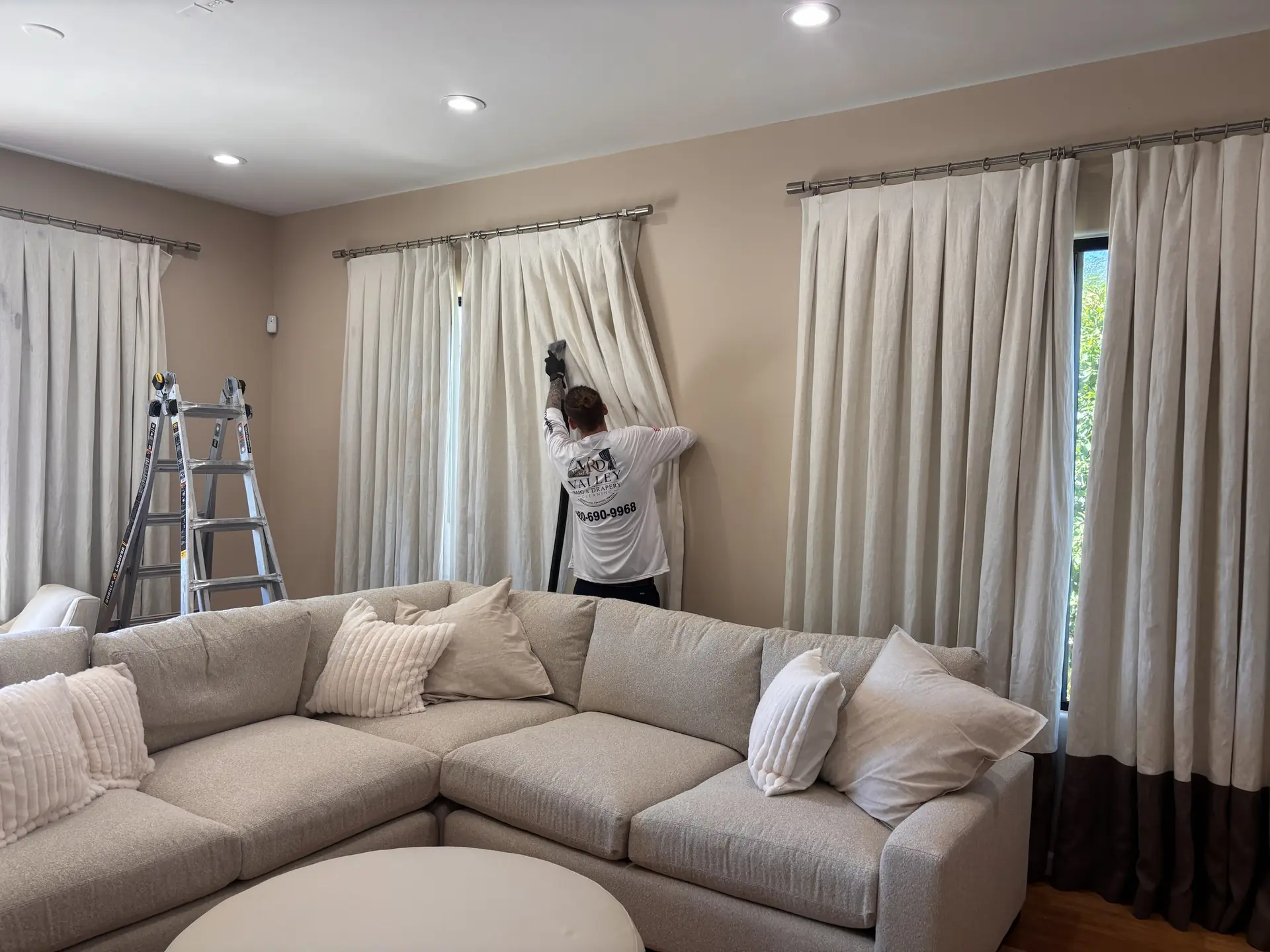
Custom drapery is a serious investment. A single set of lined, pleated panels can cost more than a piece of furniture, so the method matters as much as the result. We clean your drapes on site, on the rod. The hardware stays mounted, the panels never leave the house, and your windows are never bare.
What We Clean
We clean every common residential window treatment, including:
- Pleated drapery panels
- Lined and interlined drapes
- Sheers and voiles
- Rod pocket and grommet panels
- Valances and swags
- Cornice and box pleat treatments
- Floor-length and puddled panels
Blinds or shades on the same windows? We hand clean those in place as well. More on our blind and shade cleaning.
Area rugs in the same rooms? We clean wool, Oriental, Persian, silk, antique, and synthetic rugs right where they lie. See our area rug cleaning.
Optional treatments:
- Deodorizer for odor, smoke, or pet dander: $30 per panel
- Protectant: $75 per panel
- Sanitizing and allergen treatment: $75 per panel, applied as a fine mist across the room
Signs Your Drapery Needs Professional Cleaning
Drapery shows its condition slowly. By the time you notice, the buildup has been there for years.
Look for:
- Fabric that looks dull compared to when it was installed
- Visible dust along the top pleats and folds
- A stale or musty smell near the windows
- Cooking or smoke odor held in the fabric
- Allergy symptoms that flare in rooms with heavy window treatments
- Discoloration along the edges where sunlight hits
- Pet odor absorbed into floor-length panels
Drapes that have never been cleaned since installation are holding far more than they show.
Our Approach to Drapery Cleaning
Every window treatment is built differently. Fiber content, lining, pleat construction, hardware, and soiling all dictate the method. Silk behaves nothing like cotton. An interlined panel behaves nothing like a sheer. A process that is safe on one fabric will shrink, water-mark, or distort another.
So we inspect and test every piece before we clean it. We identify the fiber, test the dyes for colorfastness, read the construction, and set the method to match what is hanging in your window.
We recommend the right method for your drapery, not the same method for every drapery.
Why On-Site Cleaning
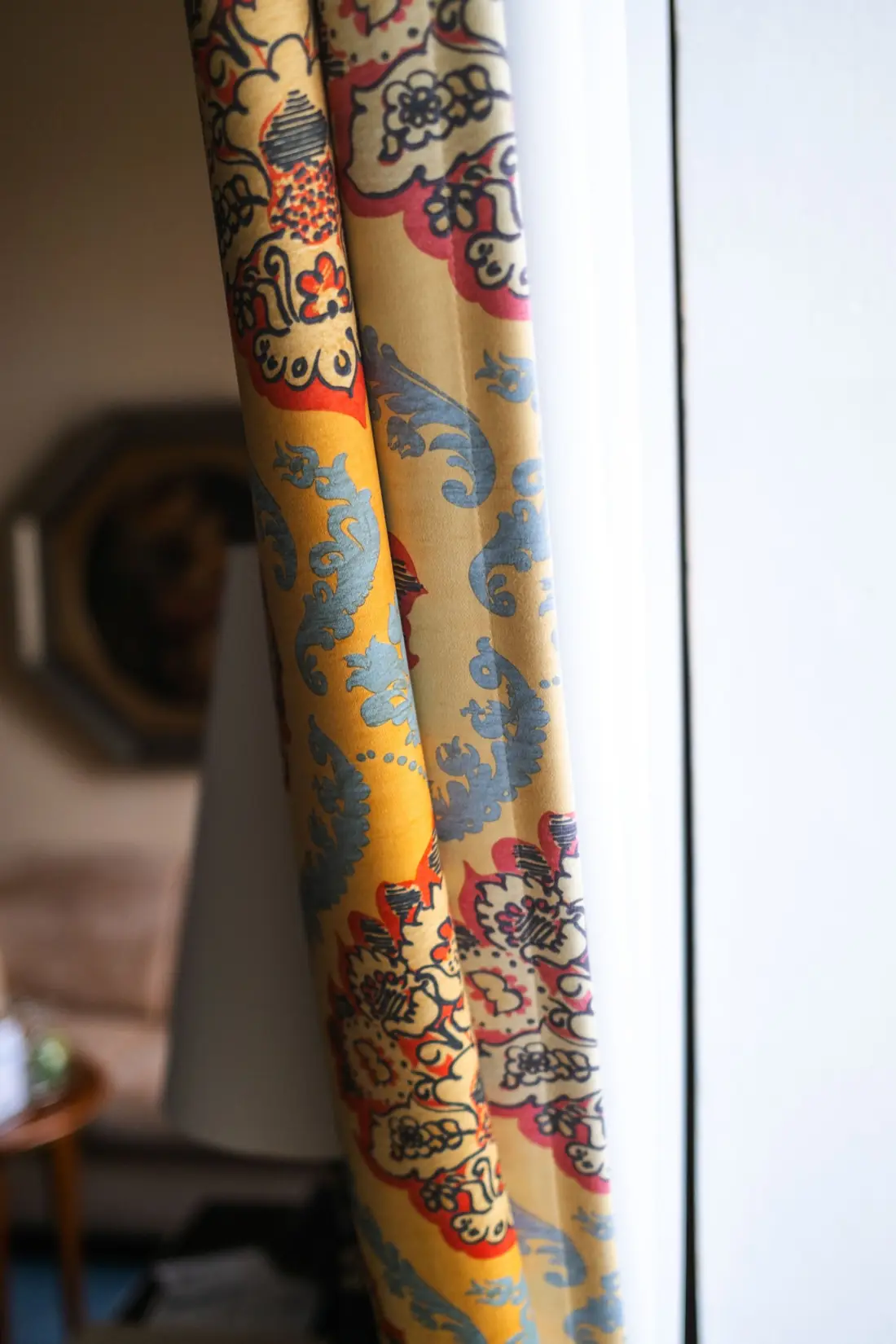
Off-site drapery cleaning means taking your panels down and rehanging them days or weeks later. That is where the damage happens: hardware gets bent coming off the rod, pleats collapse in a bag, panels rehang unevenly, and your windows sit bare the whole time.
On-site cleaning removes every one of those risks. Your drapes stay on the rod, hold their pleat structure, and are ready the same day.
What to Expect on Cleaning Day
A drapery appointment runs one to three hours depending on the number of panels and the condition of the fabric. There is nothing to prepare. We work around your furniture and window hardware, and everything stays where it is.
Panels dry within a few hours. Humidity, airflow, and fabric weight set the exact time, and lined and interlined panels take longer than sheers.
Common Fabrics We Clean
Fiber dictates method, so we identify it before anything else. We clean the full range of residential drapery fabrics, including:
- Cotton and cotton blends
- Linen
- Polyester
- Silk and silk blends
- Velvet
- Rayon and viscose
- Wool blends
- Sheers and synthetic voiles
Few homeowners know what their panels are made of, especially with inherited or previously installed treatments. That is our job, and it gets settled at inspection.
Why Valley Homes Need Drapery Cleaning
Arizona is hard on textiles. Fine desert dust works in through every opening and settles into fabric. Intense sun through south and west-facing windows breaks down fibers and discolors the leading edges. That sun fading is permanent, and no cleaning reverses it, but removing the soil stops it from compounding the damage. Homes stay closed with the air conditioning running for months, pushing the same air through the same fabric again and again.
Window treatments absorb all of it. Dusting touches the surface. Professional cleaning removes what has settled into the weave.
Ready To Refresh Your Window Treatments?
Book online in minutes. Your drapes never leave the rod.
Why Drapery Is Our Signature Work
Most cleaning companies treat drapery as an afterthought, a line item they will handle if you ask. We built this business around textiles, and drapery is the service we lead with.
We read your fabric, its construction, and its condition before we choose a method. That is the standard in every home we serve, from Scottsdale and Paradise Valley across most of the Phoenix metro.
Having blinds, shades, or area rugs done too? Book them together and we price them as one visit.
What Clients Say
“Their work on my draperies was exceptional and they cleaned stains that I would not have thought would come out!”
Drapery Cleaning FAQs
Ready to book? Count your panels in the instant estimate and schedule from there.
Do you take my drapes down to clean them?
No. We clean your drapery on site while it stays on the rod. Your hardware is never touched, your pleats keep their shape, and your windows are never left bare.
How long does on-site drapery cleaning take?
One to three hours for most homes, depending on panel count and condition. A single room takes under an hour. A whole home with fifteen or more panels takes longer. You get an estimated window when you schedule.
Will cleaning affect my pleats or lining?
No. Pleat distortion and lining problems come from take-down and rehanging, not from the cleaning itself, and on-site service eliminates both. Pleat construction and lining are checked before we begin, and the approach protects both.
Can you clean silk drapery?
Yes. Silk water-marks and shifts color easily, so every silk panel is tested for colorfastness before any method touches it. A panel with unstable dye is still cleaned, with lower moisture and a method set to keep the color where it is.
Do you clean sheers?
Yes. The open weave of sheers and voiles catches a surprising amount of dust from constant air movement. They are lightweight, so they clean and dry faster than lined panels.
How often should drapery be professionally cleaned?
Every two to three years. Sooner with pets, frequent cooking, smokers in the home, or south and west-facing windows that take heavy sun and dust. Many homes go a decade or more between cleanings, which is why the first service makes such a visible difference.
Can you remove smoke or pet odor from drapes?
Yes, in most cases. Fabric absorbs odor and holds it, and drapery is frequently the source of a smell homeowners cannot trace. How far it comes out depends on how long and how deeply it has set, and we tell you what to expect once we have assessed the panels.
Will my drapes shrink?
No. Shrinkage comes from cleaning a fabric with a method it cannot take, such as untested natural fibers hit with heavy water. That is exactly why every panel is tested before cleaning.
Do you clean valances and cornices?
Yes. Valances, swags, and cornice boards sit high with flat top surfaces, so they collect more dust than the panels below. They are the dirtiest part of most window treatments and the part people notice least.
How much does drapery cleaning cost?
Drapery cleaning is priced per panel. Most panels run $200 to $400 depending on size, fabric, lining, and condition. Oversized and two-story panels can run $750 or more each, and silk and specialty fabrics start at $300 per panel. Valances, cornices, and swags run $100 to $200 each. Panel condition decides where you fall in the range. Embedded pet hair, heavy staining, and baked-on dust take more time, and every job gets the time it needs.
That price covers what goes into every panel. The fabric is identified and tested, then cleaned by hand on the rod, with pleats, lining, and hardware protected and no take-down or rehang. It is specialist work, priced as specialist work.
There is a $350 minimum per visit in our core cities and a $500 minimum elsewhere in the Phoenix metro. If you are only having one or two windows done, booking your blinds, shades, or area rugs on the same visit gets more value out of the trip.
Every estimate is free. Get your range instantly online in about a minute, and your firm price is locked in on site after we evaluate each panel, before any work starts.